

Urban planners across Europe know the pressure to design cities that are not only efficient but truly sustainable. As urban areas face rapid growth and mounting environmental demands, finding smarter approaches becomes urgent. By embracing advanced digital technologies and data-driven insights, architects can reimagine city spaces to meet both present and future needs, achieving a balance between quality of life and ecological responsibility.
Table of Contents
- Defining Optimised City Design And Its Goals
- Core Methods For Urban Environment Improvement
- Digital Tools In Modern City Planning
- Social And Environmental Benefits Of Optimisation
- Economic Impacts And Cost Considerations
Key Takeaways
| Point | Details |
|---|---|
| Optimised City Design Enhances Sustainability | This approach integrates technology and data to create adaptable urban environments that respond effectively to societal and ecological challenges. |
| Digital Tools Revolutionise Urban Planning | Advanced technologies such as GIS, AI, and IoT enable precise data analysis, enhancing decision-making and facilitating better resource management. |
| Social and Environmental Benefits are Interconnected | Sustainable urban design not only improves community well-being but also bolsters environmental resilience, leading to healthier urban ecosystems. |
| Long-Term Economic Gains Justify Initial Investments | While upfront costs may be high, benefits like reduced operational expenses and energy savings provide compelling economic incentives over time. |
Defining Optimised City Design and Its Goals
Optimised city design represents a strategic approach to urban development that integrates advanced technologies, data-driven insights, and sustainable principles to transform urban environments. Unlike traditional urban planning, this methodology focuses on creating intelligent, responsive urban ecosystems that adapt to changing societal needs and environmental challenges.
At its core, optimised city design seeks to achieve multiple interconnected goals:
- Enhance urban efficiency through intelligent resource allocation
- Reduce environmental impact and carbon emissions
- Improve quality of life for city residents
- Create adaptable infrastructure that supports future growth
- Maximise the use of technological innovations in urban management
The fundamental objective of this approach is to systematically address urban sustainability challenges by developing holistic solutions that balance technological innovation, social inclusivity, and environmental stewardship. This means moving beyond traditional infrastructural considerations to create cities that are not just functional, but genuinely responsive to human and ecological needs.
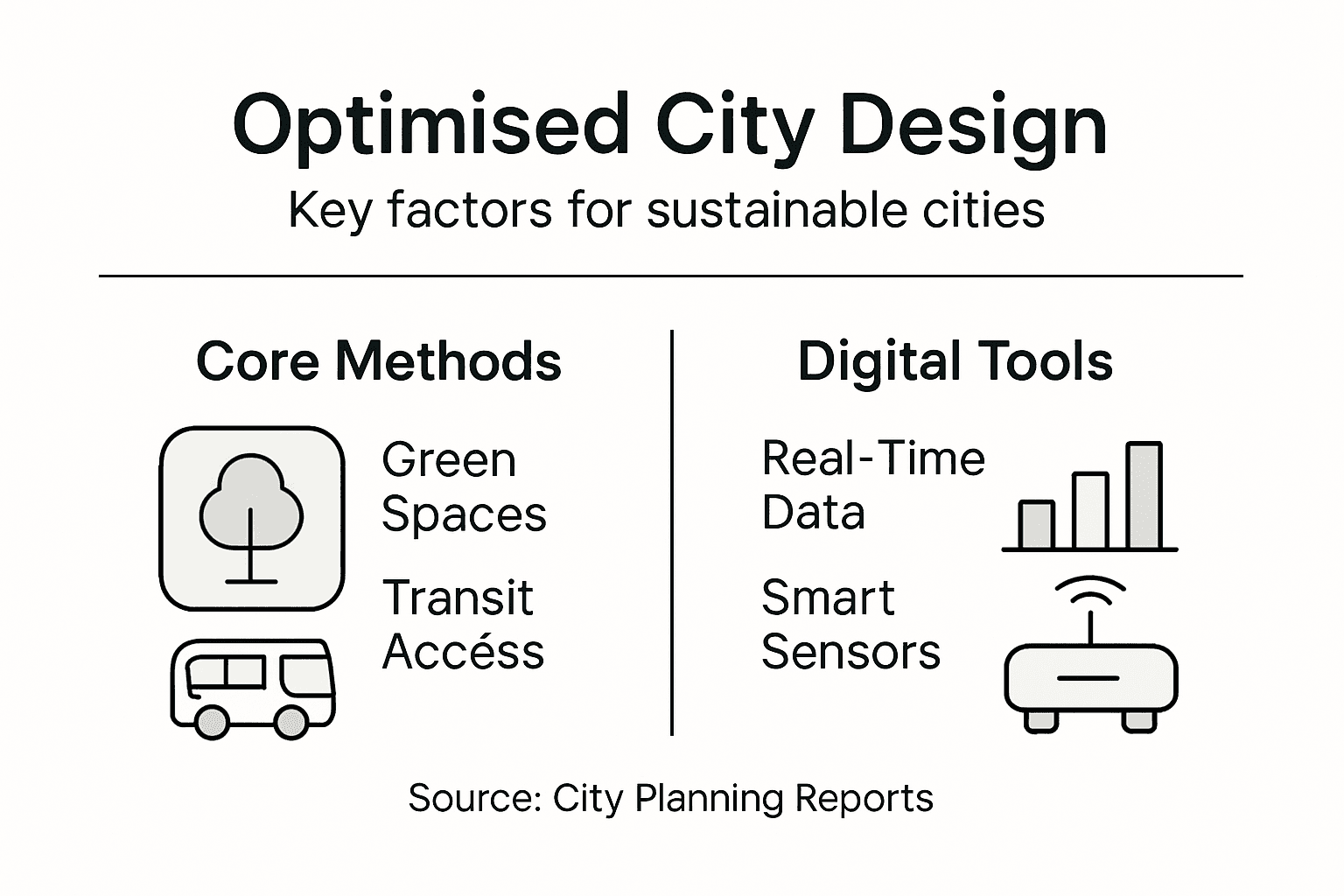
Technological integration plays a crucial role in optimised city design. By leveraging real-time data analytics, Internet of Things (IoT) sensors, and advanced modelling techniques, urban planners can develop more precise, dynamic strategies for urban development. Urban planning and optimisation approaches enable cities to monitor and adapt to complex urban systems in ways previously impossible, creating more resilient and efficient urban environments.
Pro tip: Start small by identifying one specific urban challenge in your city and explore how data-driven technologies could provide innovative solutions to that particular issue.
Core Methods for Urban Environment Improvement
Urban environment improvement represents a comprehensive strategy that addresses ecological, social, and technological challenges facing modern cities. By implementing innovative approaches, urban planners can transform urban landscapes into more sustainable, resilient, and liveable spaces that respond effectively to complex environmental challenges.
Key methods for urban environment improvement include:
- Integrating green and blue infrastructure
- Implementing nature-based solutions
- Promoting ecological regeneration
- Developing collaborative governance models
- Enhancing social inclusivity through urban design
Nature-based solutions offer critical interventions that strategically incorporate natural elements within urban environments. These approaches include creating urban parks, developing green corridors, restoring water systems, and implementing ecological design principles that mimic natural processes. By doing so, cities can simultaneously address environmental challenges while improving residents’ quality of life.
Urban regeneration represents another crucial method for environmental improvement. Urban transformation strategies focus on holistic approaches that balance physical infrastructure development with social and ecological considerations. This involves collaborative governance, stakeholder engagement, and integrated planning that considers economic, social, and environmental dimensions simultaneously.
Pro tip: Conduct a local environmental audit to identify specific urban challenges and potential nature-based solutions that could be implemented in your community.
Digital Tools in Modern City Planning
Digital technologies have revolutionised urban planning, transforming how cities are conceptualised, designed, and managed. These innovative tools provide unprecedented capabilities for urban professionals to analyse, visualise, and optimise complex urban environments with remarkable precision and depth.
Key digital technologies in modern city planning include:
- Geographic Information Systems (GIS)
- Artificial Intelligence (AI) analytics
- Virtual and Augmented Reality (VR/AR) simulations
- Internet of Things (IoT) monitoring systems
- Digital twin technologies
- Blockchain-enabled governance platforms
Digital technologies enhance urban system monitoring by providing comprehensive data collection and real-time analysis capabilities. These tools enable urban planners to create sophisticated models that simulate complex interactions between infrastructure, environment, and human activities, allowing for more informed and strategic decision-making.
Here’s how digital tools compare in their impact on modern city planning:
| Tool | Primary Function | Urban Planning Impact |
|---|---|---|
| GIS | Spatial data analysis | Enables precise mapping and zoning |
| AI Analytics | Pattern recognition and forecasting | Supports data-driven policy decisions |
| IoT Monitoring Systems | Real-time data collection | Allows dynamic city resource management |
| Digital Twin Technology | Virtual city modelling | Tests scenarios before implementation |
| VR/AR Simulations | Immersive visualisation | Enhances stakeholder engagement |
Smart city technologies are increasingly integrating advanced digital solutions to support urban resilience. Smart city technologies support adaptive planning by utilising interconnected systems that can predict, respond, and adapt to changing urban challenges. This approach transforms traditional city management by enabling more dynamic, responsive, and sustainable urban development strategies.
Pro tip: Explore free online courses and webinars that can help you understand the latest digital urban planning technologies and their practical applications.
Social and Environmental Benefits of Optimisation
Urban optimisation represents a comprehensive approach that simultaneously addresses social welfare and environmental sustainability. By integrating strategic design principles, cities can create transformative environments that enhance residents’ quality of life while minimising ecological impact.
Key social and environmental benefits include:
- Improved community well-being
- Enhanced environmental resilience
- Reduced carbon emissions
- Increased social equity
- Better public health outcomes
- Preservation of local ecosystems
Eco-friendly urban design practices significantly contribute to environmental sustainability by incorporating renewable energy technologies and green building materials. These innovative approaches not only reduce environmental degradation but also strengthen community spirit and promote social inclusivity through carefully designed urban spaces.
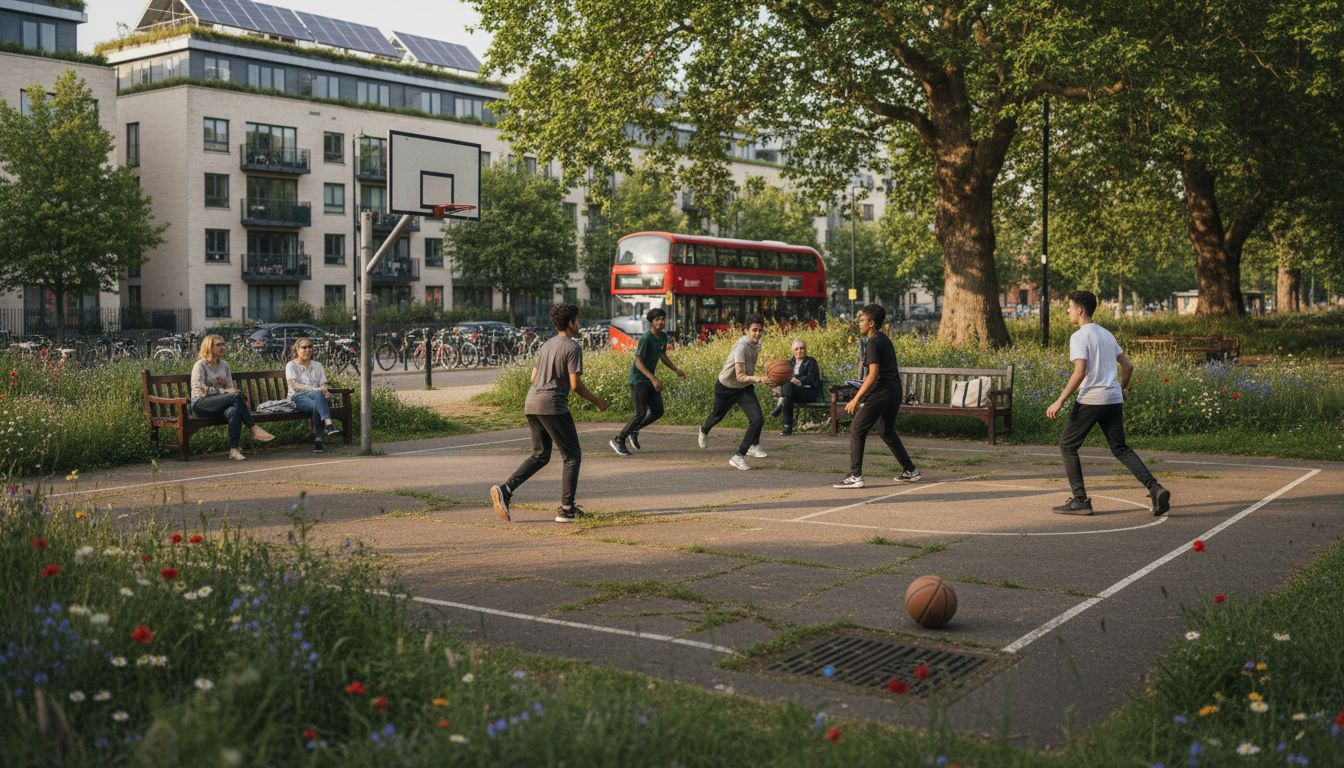
Urban green spaces provide essential community benefits by creating multifunctional environments that support physical and mental health. These spaces foster social interactions, enhance biodiversity, and provide crucial ecosystem services such as air purification, temperature regulation, and stress reduction for urban populations.
Pro tip: Start by mapping existing green spaces in your community and identify potential areas for sustainable urban interventions that can simultaneously improve environmental and social conditions.
Economic Impacts and Cost Considerations
Sustainable urban design involves complex economic calculations that extend far beyond traditional cost-benefit analysis. While initial investments in optimised city infrastructure might appear substantial, the long-term economic advantages create a compelling case for strategic urban transformation.
Key economic considerations include:
- Initial construction and implementation costs
- Long-term operational expenditure reduction
- Energy consumption savings
- Maintenance and infrastructure efficiency
- Potential economic incentives and grants
- Risk mitigation strategies
Sustainable design practices impact construction economics by introducing higher upfront investments that generate significant long-term financial benefits. Premium materials and advanced technologies may increase initial expenses, but they simultaneously reduce energy consumption, lower maintenance costs, and improve overall building performance.
Cost evaluation methods for urban adaptation emphasise comprehensive approaches like Cost-Benefit Analysis and Life-Cycle Costing. These methodologies help stakeholders understand the nuanced economic implications of sustainable urban interventions, highlighting the importance of considering both immediate expenses and future financial returns.
The following table contrasts short- and long-term economic considerations in sustainable urban design:
| Time Frame | Main Costs/Incentives | Financial Benefits |
|---|---|---|
| Short-Term | Construction and technology | Access to green grants |
| Long-Term | Maintenance and upgrades | Lower energy expenditure, reduced repairs |
Pro tip: Develop a detailed multi-year financial model that accounts for initial investments, operational savings, and potential economic incentives when planning sustainable urban projects.
Transform Your Urban Planning with Advanced 3D City Design Tools
The article highlights the crucial challenge of balancing environmental sustainability, social inclusivity and technological innovation in optimised city design. If you are striving to enhance urban efficiency, reduce environmental impact or improve quality of life through data-driven strategies and nature-based solutions then exploring powerful digital planning solutions becomes essential.
3dcityplanner.com offers a cutting-edge platform tailored for urban planners, architects and real estate professionals seeking to visualise, analyse and optimise city environments in truly innovative ways. With features such as automatic building generation, line-of-sight visualisations and sound disturbance simulations you can precisely address complex urban challenges described in the article. The platform’s 4D planning capabilities also allow real-time monitoring of project phases, accelerating decision-making while fostering collaboration.
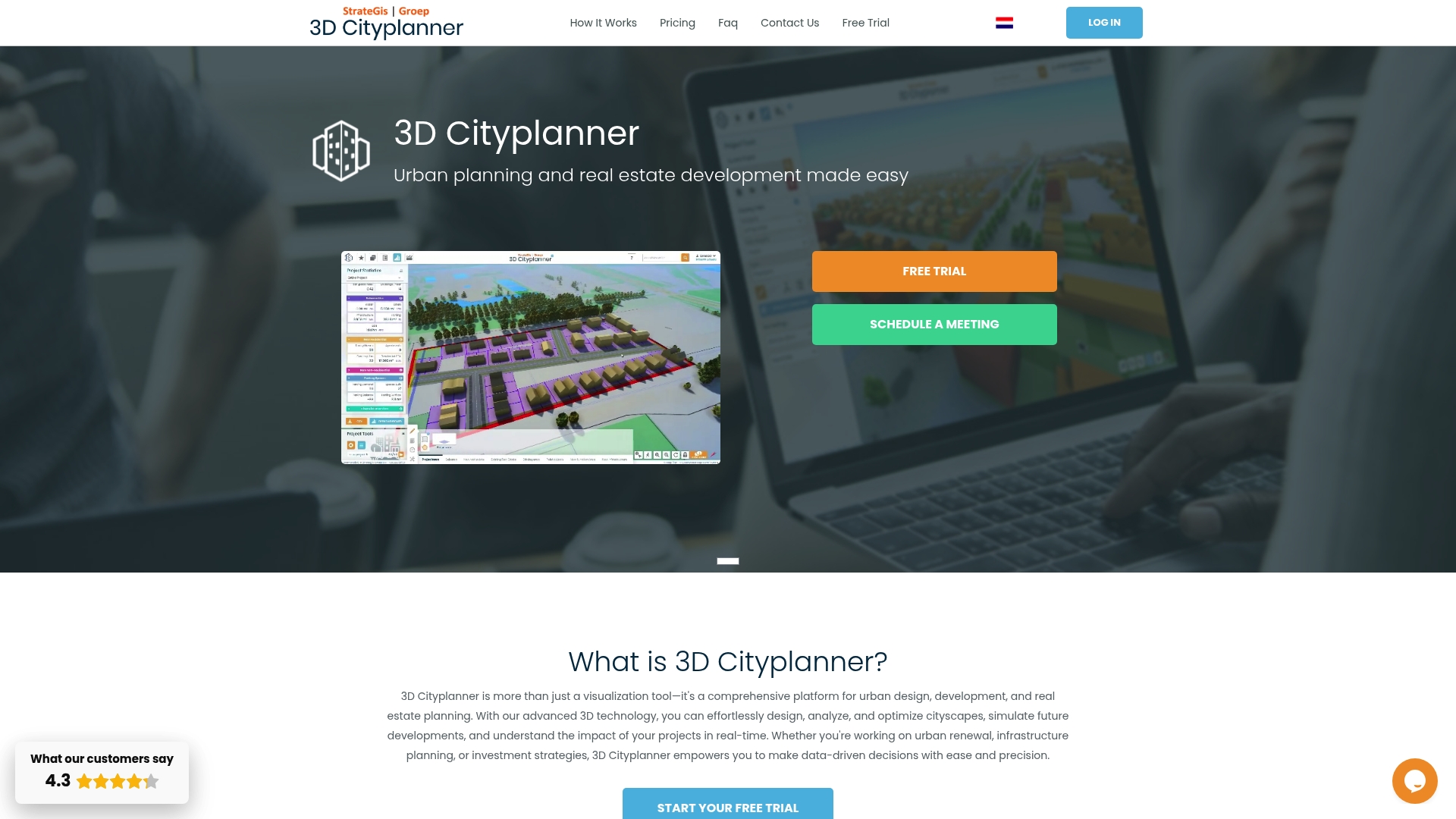
Unlock the full potential of sustainable urban design by integrating advanced 3D modelling and data analytics into your workflow. Start your journey with a no-risk trial today at 3dcityplanner.com and see how smart digital tools can transform your city projects from concept to reality. Don’t wait to lead the future of responsive, efficient and equitable city planning.
Explore more about the platform and how it supports optimised city design principles to create resilient urban spaces that benefit both people and the planet.
Frequently Asked Questions
What are the goals of optimised city design?
Optimised city design aims to enhance urban efficiency, reduce environmental impact, improve quality of life, create adaptable infrastructure, and maximise the use of technological innovations in urban management.
How do digital tools enhance city planning?
Digital tools such as GIS, AI analytics, and IoT monitoring systems enable urban planners to collect real-time data, create dynamic models, and simulate urban scenarios, leading to more informed decision-making and improved urban management.
What are some key methods for improving urban environments?
Key methods include integrating green and blue infrastructure, implementing nature-based solutions, promoting ecological regeneration, enhancing social inclusivity, and developing collaborative governance models.
What economic impacts should be considered in sustainable urban design?
Considerations include initial construction costs, long-term operational savings, energy consumption reductions, maintenance efficiency, potential grants, and risk mitigation strategies.


3 comments