

Urban planners and architects in cities like London, Paris, New York, and Shanghai are tasked with making sense of complex, ever-changing urban environments. Tackling rapid city growth and diverse stakeholder needs requires more than vision, it demands tools that bring together creativity, science, and data. By adopting sustainable urban development principles that balance economic activity, environmental protection, and social inclusion, professionals can create compelling visual stories and foster smooth collaboration on projects of any scale.
Table of Contents
Key Takeaways
| Point | Details |
| Core Principles of Urban Development | Urban development should focus on functional integration, environmental sustainability, social inclusivity, and resilience planning to create adaptable urban environments. |
| Types of Urban Development | Urban development approaches include compact, polycentric, green field, brownfield regeneration, and smart city development, each addressing specific challenges and opportunities. |
| Modern Planning Techniques | Advanced digital technologies and methodologies like generative design and predictive modelling enhance urban planning by improving accuracy and stakeholder engagement. |
| Stakeholder Engagement | Effective urban development relies on clear communication and collaboration among diverse stakeholders to mitigate risks and ensure inclusive practices. |
Core Principles of Urban Development
Urban development represents a complex, multifaceted process of designing and transforming human settlements to support sustainable, resilient communities. Sustainable urban development fundamentally balances economic production, environmental protection, and social inclusion across rapidly urbanising global contexts.
The core principles guiding modern urban development have evolved significantly from 19th and 20th-century models. Contemporary approaches emphasise holistic, adaptive frameworks that address intricate urban challenges through integrated planning strategies. These principles include:
-
Functional Integration: Designing urban spaces that seamlessly connect residential, commercial, and public areas
-
Environmental Sustainability: Minimising ecological footprints and promoting green infrastructure
-
Social Inclusivity: Creating accessible urban environments supporting diverse population needs
-
Resilience Planning: Developing adaptable urban systems capable of responding to climate and demographic changes
Modern urban planners increasingly recognise that successful development requires interdisciplinary approaches. This means moving beyond traditional architectural design to incorporate perspectives from sociology, environmental science, economics, and technology. The goal is creating urban environments that are not just physically functional, but socially dynamic and environmentally responsible.
Pro Tip: When approaching urban development projects, always conduct comprehensive stakeholder consultations to ensure inclusive and contextually appropriate design strategies.
Distinct Types of Urban Development
Urban development encompasses diverse approaches tailored to specific geographical, socio-economic, and environmental contexts. Urban growth modelling has evolved from simple linear approaches to complex, integrated methodologies that capture the nuanced realities of modern city transformations.
The primary types of urban development can be categorised into several distinct models:
-
Compact Urban Development: Focusing on dense, vertically integrated urban spaces that minimise land consumption
-
Polycentric Urban Development: Creating multiple interconnected urban centres to distribute economic and social activities
-
Green Field Development: Expanding urban areas into previously undeveloped land, often at city peripheries
-
Brownfield Regeneration: Redeveloping previously used industrial or commercial sites for new urban purposes
-
Smart City Development: Integrating advanced technologies to create more efficient, sustainable urban ecosystems
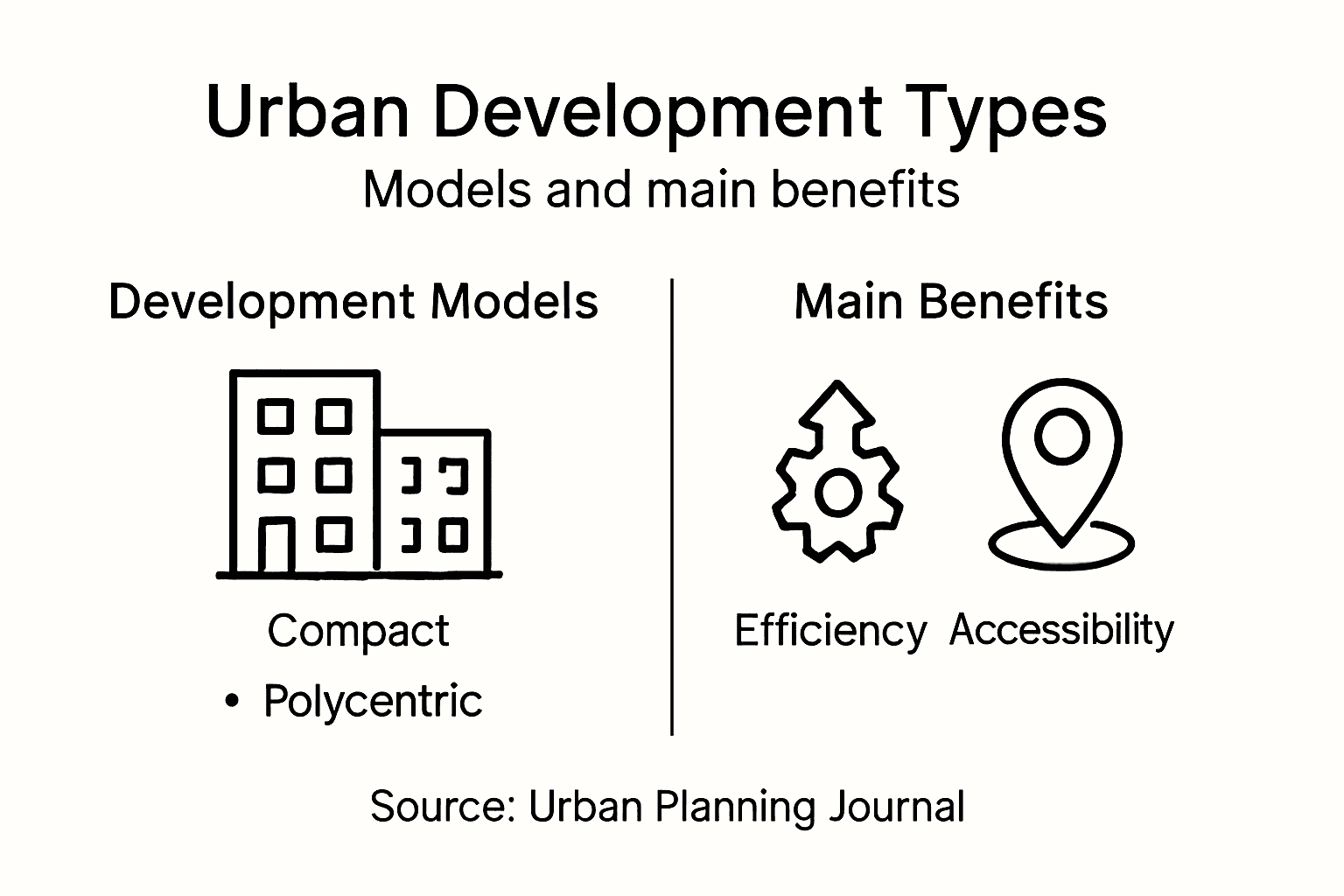
Each development type addresses unique challenges and opportunities within urban planning. Compact models prioritise efficiency and reduced environmental impact, while polycentric approaches aim to decentralise urban services and reduce transportation dependencies. Green field developments offer expansion opportunities, whereas brownfield regeneration provides sustainable urban renewal strategies.

The following table provides a concise comparison of urban development models and their key benefits and limitations:
| Development Model | Main Benefit | Typical Limitation |
| Compact Urban | Efficient land use and reduced sprawl | Potential overcrowding issues |
| Polycentric Urban | Balanced economic activity across centres | Coordination complexity |
| Green Field | Room for urban expansion | Loss of natural habitats |
| Brownfield Regeneration | Revitalises underused urban land | Higher remediation costs |
| Smart City | Data-driven efficiency and sustainability | Technological dependency risks |
Pro Tip: Always conduct comprehensive site analysis and stakeholder consultations to determine the most appropriate urban development approach for specific geographical and social contexts.
Planning Processes and Modern Techniques
Urban planning has undergone a remarkable transformation with the integration of advanced digital technologies and computational methodologies. Artificial intelligence applications are revolutionising spatial design by enabling unprecedented predictive analytics and automated decision-making processes in urban development.
Key modern planning techniques encompass several innovative approaches:
-
Generative Design: Utilising computational algorithms to generate multiple urban design scenarios
-
Predictive Modelling: Forecasting urban growth and infrastructure requirements using complex data analytics
-
Geo-spatial Simulation: Creating digital replicas of urban environments for scenario testing
-
Participatory Planning: Incorporating stakeholder feedback through digital collaboration platforms
-
Machine Learning Optimisation: Analysing historical urban data to recommend optimal development strategies
The emergence of sophisticated tools like Geographic Information Systems (GIS) and advanced computational models has fundamentally altered traditional urban planning methodologies. These technologies enable planners to simulate complex urban scenarios, assess environmental impacts, and develop more resilient, sustainable urban environments with unprecedented precision and insight.
This table summarises how emerging digital planning techniques enhance urban planning outcomes:
| Technique | Practical Application | Resulting Planning Advantage |
| Generative Design | Algorithm-generated design scenarios | More creative urban solutions |
| Predictive Modelling | Forecasting growth and infrastructure | Proactive resource allocation |
| Geo-spatial Simulation | Digital environment scenario testing | Reduced project implementation risk |
| Participatory Planning | Digital stakeholder involvement | Increased community engagement |
| Machine Learning Optimisation | Data-driven strategy recommendations | Improved planning accuracy |
Pro Tip: Integrate interdisciplinary expertise and leverage digital simulation tools to create more comprehensive and adaptive urban development strategies.
Legal Frameworks Governing Urban Growth
Urban legal frameworks form the critical infrastructure that guides sustainable city development and ensures orderly spatial expansion. Urban legislation fundamentally balances public and private interests through comprehensive regulatory mechanisms that address complex metropolitan challenges.
The essential components of effective urban legal frameworks include:
-
Land Use Regulations: Defining permissible spatial development and property utilisation
-
Zoning Ordinances: Establishing specific guidelines for different urban areas and districts
-
Environmental Compliance Standards: Mandating sustainable development practices
-
Infrastructure Development Protocols: Outlining requirements for public utility and transportation networks
-
Social Equity Provisions: Ensuring inclusive urban planning that protects marginalised communities
Modern urban legal frameworks must remain adaptive, responding dynamically to technological advancements, demographic shifts, and emerging environmental challenges. The complexity of these regulations requires sophisticated understanding, integrating national legislation with localised context-specific requirements.
Pro Tip: Regularly review and update urban legal frameworks to maintain alignment with technological innovations and evolving societal needs.
Key Risks and Stakeholder Responsibilities
Urban development projects inherently involve complex interactions between multiple stakeholders, each bringing distinct perspectives and potential conflicts. Stakeholder identification and management are critical for navigating the intricate landscape of sustainable city development and ensuring balanced, collaborative outcomes.
Key stakeholder groups and their primary responsibilities include:
-
Municipal Authorities: Establishing regulatory frameworks and strategic urban planning guidelines
-
Private Developers: Implementing sustainable infrastructure and adhering to zoning regulations
-
Community Representatives: Providing local insights and ensuring inclusive development processes
-
Environmental Experts: Assessing ecological impacts and recommending mitigation strategies
-
Financial Institutions: Providing investment capital and evaluating project sustainability
The most significant risks in urban development emerge from misaligned stakeholder interests, inadequate communication, and insufficient risk management strategies. These challenges can lead to project delays, increased costs, and potential environmental or social disruptions. Effective risk mitigation requires transparent communication, comprehensive multi-criteria analyses, and robust collaborative frameworks that prioritise shared value creation.
Pro Tip: Develop a comprehensive stakeholder engagement matrix that clearly defines roles, responsibilities, and communication protocols to minimise potential conflicts and enhance project success.
Transform Your Urban Development Challenges with Advanced 3D Planning Tools
Urban development demands balancing complex factors such as sustainability, social inclusivity, and resilience while managing diverse stakeholder interests. This article highlights key challenges including integrated planning, predictive modelling, and adaptive legal frameworks. If you are aiming to create efficient, environmentally responsible, and socially dynamic cities, mastering these concepts is essential.
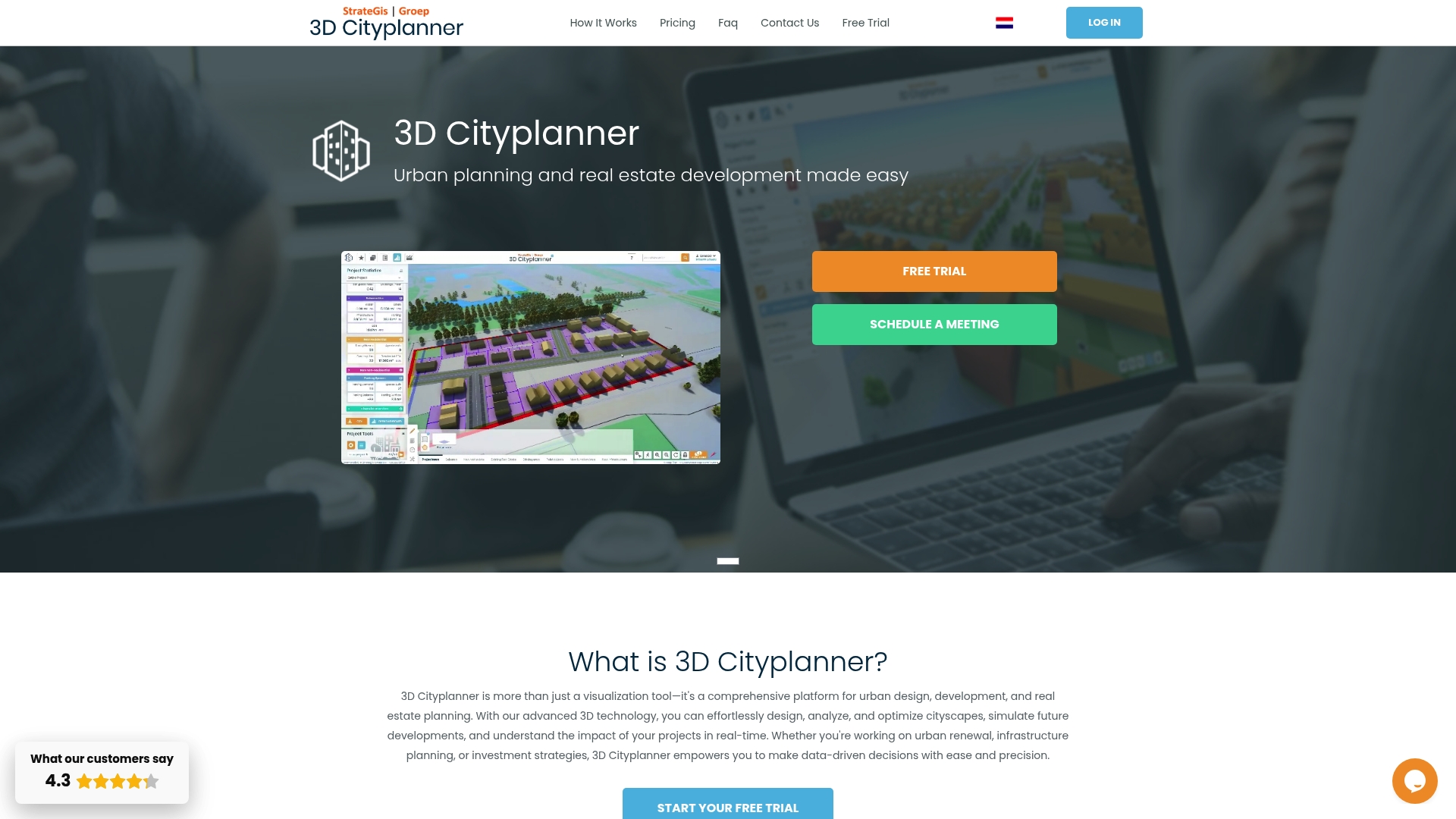
Unlock the potential of your projects with 3dcityplanner.com, a cutting-edge digital platform specifically designed for urban planning, development, and real estate management. Benefit from powerful features like automatic building generation, line-of-sight visualisations, and 4D planning with real-time timelines that let you simulate project phases effectively. Start optimising your urban designs today and enhance decision-making through data-driven insights. Visit 3dcityplanner.com now to explore tools that align with the core principles of modern urban development and bring your visionary city plans to life.
Frequently Asked Questions
What are the core principles of modern urban development?
The core principles of modern urban development include functional integration, environmental sustainability, social inclusivity, and resilience planning. These principles guide the creation of urban environments that are functional, socially dynamic, and environmentally responsible.
What are the main types of urban development?
The main types of urban development include compact urban development, polycentric urban development, green field development, brownfield regeneration, and smart city development. Each type has its unique benefits and limitations, tailored to specific urban challenges.
How do modern techniques improve urban planning?
Modern techniques, such as generative design, predictive modelling, geo-spatial simulation, participatory planning, and machine learning optimisation, enhance urban planning by providing innovative approaches for scenario testing, resource allocation, and community engagement, leading to more resilient and sustainable urban environments.
What are the key risks associated with urban development projects?
Key risks in urban development projects include misaligned stakeholder interests, inadequate communication, and insufficient risk management strategies. These can lead to project delays, increased costs, and environmental or social disruptions, highlighting the importance of stakeholder engagement and collaborative frameworks.


2 comments