

Balancing climate resilience, social equity, and rapid urbanisation has pushed city planning far beyond its historical routines. For European urban planners and architects, the challenge now requires weaving together sustainability and digital platforms as foundational practice—not an afterthought. With collaborative, data-driven environments and 3D city modelling in urban planning rising to the forefront, innovative tools are transforming not only how designs are created but also how communities are shaped for 2026 and beyond.
Table of Contents
- Defining Future City Planning In 2026
- Emerging Trends In Urban Sustainability
- Role Of 3D And Digital Platforms
- Smart Infrastructure And Connectivity Advancements
- Challenges, Risks And Best Practices For Planners
Key Takeaways
| Point | Details |
|---|---|
| Emphasis on Sustainability | Future city planning integrates sustainability as a core principle, ensuring eco-friendly development and resilience against climate change. |
| Role of Technology | Smart city technologies, including real-time data and AI, are essential for creating responsive urban environments and decision-making processes. |
| Need for Collaboration | Multidisciplinary collaboration among various sectors, including community involvement, is crucial for addressing complex urban challenges effectively. |
| Adaptive Governance | Planners must adopt flexible governance structures that can respond to evolving conditions and stakeholder needs effectively. |
Defining Future City Planning in 2026
City planning in 2026 represents a fundamental departure from 20th-century approaches. It integrates sustainability, technology, and human-centred design in ways previous generations couldn’t imagine. This shift isn’t optional—it’s driven by pressing global challenges including climate change, rapid urbanisation, and social inequality.
Urban planners today face unprecedented complexity. You’re no longer designing static buildings and streets; you’re creating responsive ecosystems. The focus has shifted from accommodating growth to creating liveable, resilient communities that function across multiple dimensions simultaneously.
The future of city planning rests on six interconnected pillars:
- Sustainability as the foundational principle, not an afterthought
- Smart city technologies that integrate data and automation
- Resilience planning against climate impacts and social disruptions
- Inclusive urban design that serves all community members
- Multidisciplinary collaboration across professions and sectors
- Adaptive governance that responds to changing conditions
Urban planning principles linked to future cities now demand that you adopt modern sciences and emerging technologies to create coherent, sustainable environments. This represents a significant evolution from previous practice.

The 2026 planning horizon specifically emphasises a mission-oriented approach. Rather than viewing projects through narrow technical lenses, planners must prioritise liveability, resilience, and inclusivity across all decisions. Your role has expanded beyond zoning and infrastructure to encompassing social justice, environmental stewardship, and economic vitality.
What distinguishes 2026-forward planning is the integration of real-time data and simulation capabilities. You can now model urban systems before construction begins, testing scenarios and outcomes at scale. This transformative capability fundamentally changes how decisions get made.
Future city planning requires simultaneously addressing climate resilience, technological integration, social equity, and environmental protection—not as separate concerns, but as interconnected dimensions of a single vision.
Successful planners in this era understand that transformative urban transitions depend on collaborative development programmes. Silos between disciplines and stakeholders actively undermine outcomes. Cross-sector partnerships—between government, private developers, community organisations, and academic institutions—have become essential infrastructure for planning itself.
The practical implication for your work is straightforward: planning documents now require input from ecologists, data scientists, social workers, and engineers alongside traditional urban designers. This complexity demands new tools and platforms that facilitate genuine collaboration across expertise.
To better understand the evolving pillars of future city planning, here is a concise summary of their purpose and impact:
| Pillar | Main Purpose | Impact on Urban Planning |
|---|---|---|
| Sustainability | Environmental stewardship | Drives eco-friendly development |
| Smart Technologies | Data-driven systems | Enables responsive city design |
| Resilience Planning | Adaptation to climate and disruptions | Builds robust urban environments |
| Inclusive Design | Equity for all communities | Reduces social gaps |
| Multidisciplinary Collaboration | Integration of expertise | Solves complex urban issues |
| Adaptive Governance | Flexible policy & decision-making | Responds to changing needs |
Pro tip: Start mapping stakeholder networks and data sources before beginning design work; identifying what information gaps exist and who needs to be involved prevents costly revisions after planning phases conclude.
The following table compares the traditional and modern approaches to urban planning, highlighting key differences for 2026 and beyond:
| Aspect | Traditional Approach | 2026 Approach |
|---|---|---|
| Design Focus | Static infrastructure | Responsive ecosystems |
| Decision Basis | Historical data | Real-time modelling |
| Community Role | Limited consultation | Ongoing participation |
| Collaboration | Sequential, siloed | Simultaneous, cross-sector |
| Technology Use | Minimal | Essential, integrated |
Emerging Trends in Urban Sustainability
Urban sustainability in 2026 is no longer about isolated green initiatives. It’s about weaving environmental responsibility, technological innovation, and social equity into the core fabric of city systems. The trends shaping this shift are distinct and actionable.
Smart technologies are transforming how cities function at scale. Artificial intelligence, sensor networks, and real-time data systems now enable planners to monitor urban performance continuously. This isn’t futuristic speculation—it’s operational reality in European cities today.
Community participation has shifted from consultative afterthought to essential planning mechanism. Smart technologies aligned with community needs foster genuinely equitable outcomes. When residents shape decisions from the outset, projects address actual problems rather than assumed ones.
The emerging priorities shaping urban sustainability include:
- Accelerating sustainability transformations through policy and investment
- Ensuring equity across economic and demographic groups
- Fostering innovation in lower-income regions where needs are greatest
- Managing complexity and interconnected risks across urban systems
- Navigating environmental change with adaptive infrastructure
Interdisciplinary collaboration is no longer optional. Architects, engineers, ecologists, social scientists, and community organisers must work simultaneously rather than sequentially. Silos delay implementation and miss opportunities for integrated solutions.
Five strategic research priorities emphasise cross-disciplinary thinking and transdisciplinary co-production. This means planners and communities designing together, not separately.
Sustainable urban futures emerge when technological innovation, community voice, and environmental stewardship operate as interconnected priorities, not competing interests.
Circular economy principles are reshaping how European cities approach waste, energy, and resource flows. Instead of linear consumption patterns, cities now design systems where materials cycle repeatedly. This requires rethinking infrastructure from the design phase onwards.
Climate resilience has become a planning necessity, not a sustainability bonus. Flooding, heat stress, and extreme weather demand infrastructure that adapts rather than resists. This influences everything from street design to building materials to green space distribution.
Data transparency and citizen engagement platforms are enabling residents to track sustainability metrics directly. Real-time dashboards showing air quality, energy consumption, and waste management build accountability and encourage behavioural change at individual and community levels.
Pro tip: Map your current stakeholder ecosystem and identify which disciplines are missing before finalising your sustainability strategy; gaps in expertise often become costly oversights during implementation.
Role of 3D and Digital Platforms
3D and digital platforms have become indispensable for European urban planners. They transform how you visualise, test, and communicate design decisions before construction begins. Without these tools, modern city planning simply cannot achieve the precision and speed required in 2026.

Digital twins represent the most transformative advancement. These virtual replicas of cities incorporate real-time data on traffic, energy consumption, waste management, and environmental conditions. You can simulate how changes ripple through interconnected urban systems before implementation.
Urban Digital Twin platforms enable interactive visualisations and behaviour simulations that reveal consequences of planning decisions. Rather than discussing theoretical impacts, you show stakeholders exactly what happens when you adjust building heights, modify street layouts, or introduce new transport corridors.
Three-dimensional modelling capabilities unlock several planning advantages:
- Spatial accuracy that eliminates ambiguity in design communication
- Stakeholder engagement through immersive visualisations rather than flat maps
- Conflict identification before construction exposes overlapping infrastructure claims
- Heritage preservation integration when retrofitting historic districts with new development
- Performance prediction across energy, acoustics, and environmental metrics
3D city modelling in urban planning combined with data from unmanned aerial vehicles and sensors creates comprehensive spatial datasets. These foundations enable evidence-based decisions grounded in measurable reality, not assumptions.
Augmented reality and virtual reality integration are emerging as standard capabilities. Rather than viewing models on screens, planners and communities now experience designs at full scale in proposed locations. This shifts perception fundamentally—people understand spatial relationships instinctively when they can walk through virtual environments.
Digital platforms serve as single sources of truth for urban projects, eliminating version control problems and ensuring all stakeholders access identical, up-to-date information simultaneously.
Data integration across departmental silos remains a practical challenge. Your transport team, environmental specialists, and heritage experts often operate separate systems. Effective 3D platforms centralise this information, forcing genuine collaboration because everyone references the same base reality.
Event simulation capabilities allow testing how cities perform under stress. Flood scenarios, heatwaves, or major gatherings can be modelled to reveal vulnerabilities. This predictive capacity enables resilience planning grounded in evidence rather than intuition.
Implementation typically requires upfront investment in data collection and platform training. Initial time investment pays dividends through accelerated decision-making and reduced expensive mistakes downstream.
Pro tip: Start with pilot projects using 3D platforms on smaller interventions before committing to city-wide adoption; early successes build internal expertise and secure stakeholder buy-in for larger investments.
Smart Infrastructure and Connectivity Advancements
Smart infrastructure represents the nervous system of 2026 cities. IoT sensors, AI systems, and real-time data networks create urban environments that respond intelligently to changing conditions. This connectivity fundamentally transforms how planners operate and how cities function.
Interconnected systems now monitor everything simultaneously. Traffic flows, energy consumption, air quality, waste streams, and water usage generate constant feedback loops. Your infrastructure adapts dynamically rather than operating on fixed schedules designed decades ago.
Smart city technologies including IoT and AI enhance urban resilience by supporting adaptive planning reforms. However, effectiveness depends critically on inclusive governance and equitable application. Technology alone fails without proper institutional frameworks.
Key smart infrastructure components transforming cities include:
- Internet of Things networks providing real-time environmental and operational data
- Artificial intelligence systems optimising traffic, energy, and resource distribution
- Digital twins enabling predictive modelling before physical changes occur
- Blockchain systems ensuring transparent governance and data integrity
- Geographic Information Systems integrating spatial data across departments
Connectivity infrastructure itself demands attention. 5G networks, fibre optics, and wireless systems must reach every neighbourhood equitably. Infrastructure gaps create digital divides where some communities benefit whilst others remain excluded from smart city advantages.
Global smart city initiatives emphasise stakeholder engagement and data governance as essential success factors. Technology deployment fails when communities feel excluded from decisions. Adaptive institutional frameworks allow systems to evolve as circumstances change.
Smart infrastructure’s true value emerges when technology integration aligns with inclusive governance, equitable data access, and community participation in decision-making processes.
Data governance requires explicit attention. Who owns collected data? How is it shared? What privacy protections exist? These questions determine whether smart systems build trust or undermine public confidence. Transparent policies addressing these concerns are non-negotiable.
Maintenance and upgrade cycles differ dramatically from traditional infrastructure. Smart systems require continuous software updates, sensor replacement, and system recalibration. This ongoing operational intensity contrasts sharply with passive infrastructure that functioned for decades unchanged.
Interoperability between systems remains a practical challenge. Your transport authority’s systems may not communicate with energy management platforms, creating information silos. Standards and integration protocols are still evolving across European cities.
Pro tip: Establish data governance frameworks and stakeholder engagement protocols before deploying smart infrastructure; retrofitting governance and building trust after systems operate proves far more difficult and costly than getting foundations right initially.
Challenges, Risks and Best Practices for Planners
Urban planning in 2026 operates within unprecedented complexity. You’re balancing climate change mitigation, rapid urbanisation, social justice demands, and technological disruption simultaneously. Single-issue approaches no longer suffice—challenges interconnect in ways that demand integrated solutions.
The primary challenge facing planners is addressing competing priorities without clear hierarchies. Environmental sustainability often conflicts with affordable housing requirements. Heritage preservation can clash with modern accessibility needs. These aren’t problems with easy answers; they require deliberate trade-off frameworks grounded in community values.
Technology introduces both opportunities and risks. Urban planning addressing complexity through flexibility and inclusivity requires balancing smart technology adoption with genuine accessibility. Digital divides mean some residents benefit from smart city innovations whilst others remain excluded entirely.
Critical challenges and associated risks include:
- Social inequality deepening if technology benefits concentrate among wealthy neighbourhoods
- Community resistance when planners proceed without genuine stakeholder engagement
- Legacy system incompatibility between new infrastructure and existing assets
- Skills gaps in understanding and managing emerging technologies effectively
- Governance fragmentation when multiple authorities lack coordination mechanisms
Inequality represents the most insidious risk. Urban innovation requiring transformative governance demands inclusive policy-making and participatory planning throughout implementation. Technology-led solutions without equity frameworks amplify existing disparities rather than reducing them.
Best practices emphasise flexibility and adaptation over rigid master plans. Circumstances change faster than traditional five-year or ten-year plans can accommodate. Modular approaches allowing course correction within established frameworks prove more effective than inflexible blueprints.
Successful planning balances environmental conservation, community well-being, and economic growth through flexible frameworks that adapt as circumstances evolve and new evidence emerges.
Community engagement demands genuine power-sharing, not tokenistic consultation. Early involvement in problem definition—not just solution review—shifts outcomes fundamentally. Residents identify priorities planners might miss and surface constraints that affect feasibility.
Collaboration across disciplinary silos remains difficult but essential. Transport planners, environmental specialists, heritage experts, and social workers operate in separate worlds. Breaking down these barriers requires structural changes to budgets, reporting lines, and project governance.
Data literacy among planning staff requires investment. Understanding what datasets mean, recognising limitations, and avoiding false precision from models demands training most organisations haven’t provided systematically.
Pro tip: Build stakeholder engagement protocols and conflict resolution procedures before major projects begin; front-loading these difficult conversations prevents far more costly disputes during implementation phases.
Empower Your Urban Planning with Advanced 3D Tools for 2026
Facing the challenges of designing responsive, sustainable, and inclusive urban spaces requires more than traditional methods. The future of city planning demands real-time data integration, multidisciplinary collaboration, and innovative digital platforms that bring your vision to life with precision and clarity. At 3dcityplanner.com you will find powerful solutions that match these essential needs with advanced 3D modelling, interactive simulations and data-driven insights designed for professionals aiming to create resilient and liveable cities.
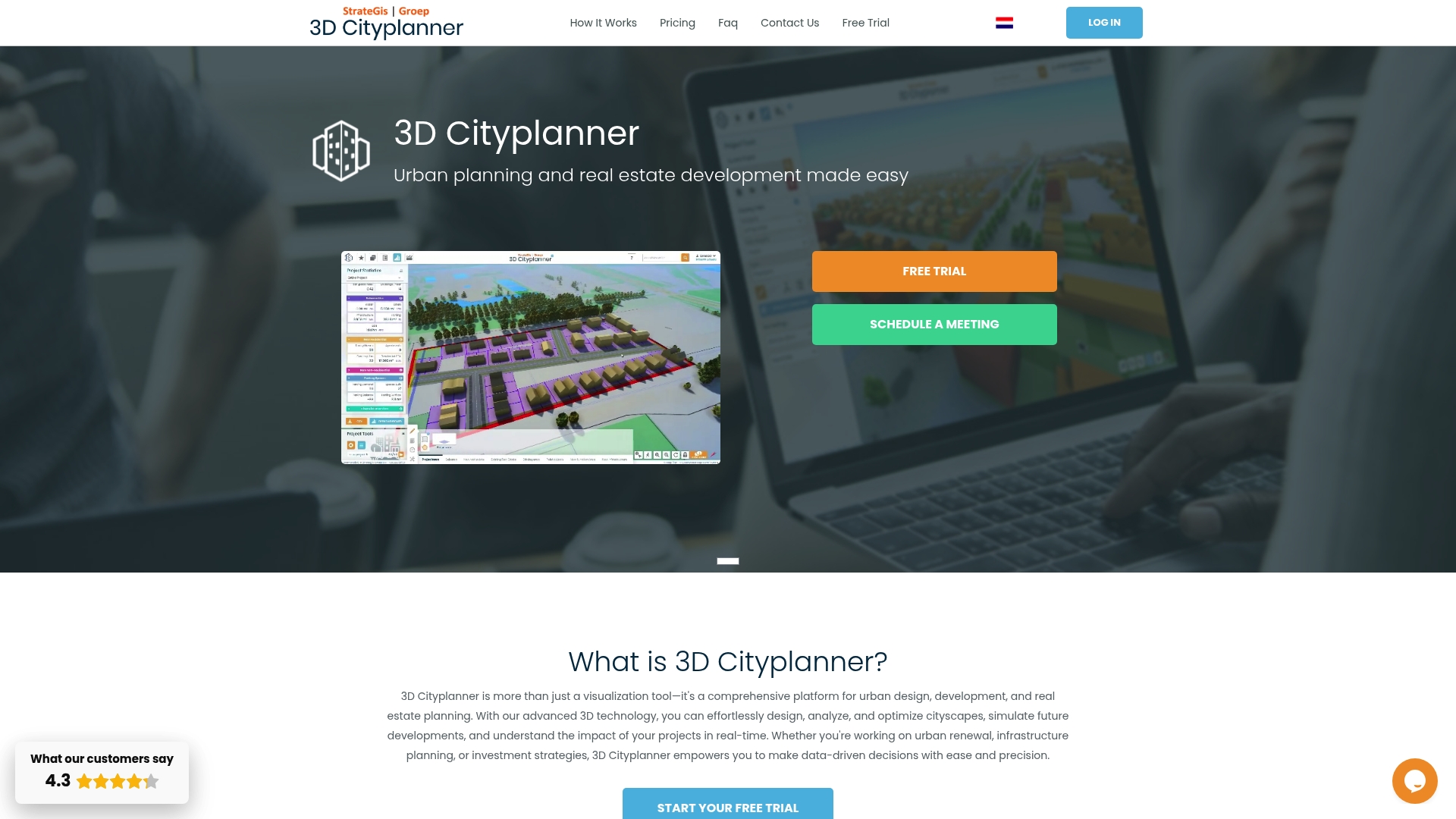
Unlock the potential of digital twins, automated building generation and noise pollution simulations to tackle the complexities highlighted in the article such as resilience planning and smart infrastructure connectivity. Start planning with tools that foster inclusive engagement while reducing costly revisions. Visit 3dcityplanner.com today to explore how our platform equips you to shape the future of your city with confidence and creativity. Discover more details and get started on your first project with ease at 3dcityplanner.com. Make the leap towards adaptive governance and transformative urban design now.
Frequently Asked Questions
What are the key pillars of city planning in 2026?
The key pillars of city planning in 2026 include sustainability, smart city technologies, resilience planning, inclusive urban design, multidisciplinary collaboration, and adaptive governance.
How does technology impact urban planning in 2026?
Technology impacts urban planning in 2026 by enabling real-time data integration and simulation capabilities, allowing planners to model urban systems, identify issues, and make informed decisions before construction begins.
What role does community engagement play in modern urban planning?
Community engagement is essential in modern urban planning as it ensures that residents have a say in decisions that affect their environments, leading to projects that address actual needs rather than assumptions.
What challenges do urban planners face in 2026?
Urban planners in 2026 face challenges such as competing priorities, social inequality, community resistance, legacy system incompatibility, skills gaps, and fragmented governance that require integrated and flexible solutions.
Recommended
- Role of 3D Technology in Urbanism: Shaping Sustainable Cities – 3D Urban Development
- Urban Masterplanning: Shaping Sustainable Cities – 3D Urban Development
- 6 Best City Planning Best Practices for Urban Modelling – 3D Urban Development
- 3D Urban Development – Where data, 3D and urban design come together


One comment